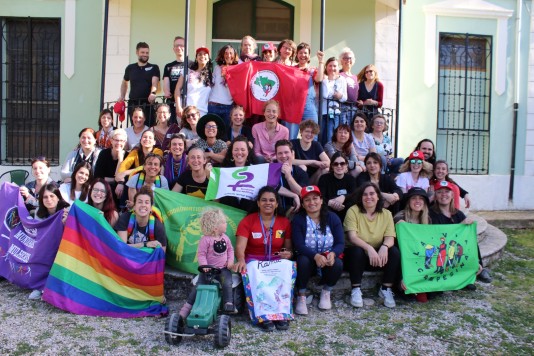
Across Europe, women and gender-diverse farmers are the backbone of rural communities and sustainable food production. Women in farming more often than men apply agroecological practices, and they provide social infrastructure for their local communities. However, they remain underrecognised in formal leadership and land ownership, and often perform un(der)paid labour. Only 5–30% of farms are owned by women, and female farmers earn, on average, 12,000 € compared to an income of 40,000 € for male farmers.
The new SWIFT report clearly shows: the EU’s Common Agricultural Policy (CAP), Europe’s most powerful tool for shaping food and farming, is part of the problem. It treats gender as an afterthought, and it reinforces old inequalities instead of dismantling them. Subsidies remain tied to land area, which systematically disadvantages women and small-scale farmers, many of whom run small, diverse, and sustainable farms.
Change is possible, but only if EU politicians make gender equality a stand-alone CAP objective. Subsidies must support women’s small-scale agroecological farms and ensure fair prices. Food justice must always mean gender justice. If we want a future-fit CAP and a truly fair food system, gender equality must be at the heart of agricultural policy, shaping who gets support, whose voices count, and who thrives in Europe’s fields.