Unsubscribe
View in your browser

Food for Change Newsletter

3rd Edition, September 2024
 
Engage & Act
European Days of Action 1-31 October 
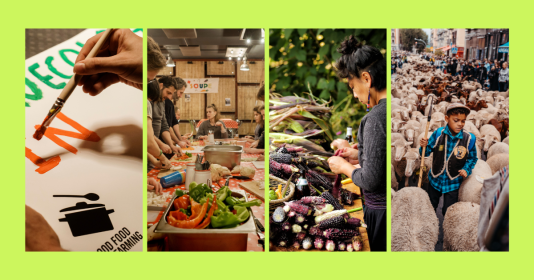
October is fast approaching, and so are the European Days of Action! Across the EU, hundreds will mobilize to show politicians we want a just transition in our agrifood systems! This year, we invite you to organize your own event or register one you’ve already planned. Whether it’s a protest, picnic, workshop, film screening, or harvest—online or in person—there are no strict rules, just one cause: #GoodFoodGoodFarming!
 
Why get involved? By mid-2025, the EU will decide how taxpayer money is spent in the future. With 1/3 of the EU budget going to agricultural subsidies, these decisions will shape the future of our food, farms, and livelihoods. We deserve a say in how our taxes are used!
 
Register today for the European Days of Action to:
  • Promote your event on our social media and Action Map.
  • Apply for funding to hire a videographer. Video grants will be awarded at the end of September, so register early!
  • Receive free campaign materials, including a fun info-poster and recipe pages for participants to fill out! We will turn these into a unique 'Cook Book' and deliver it to the European Commission in spring 2025.
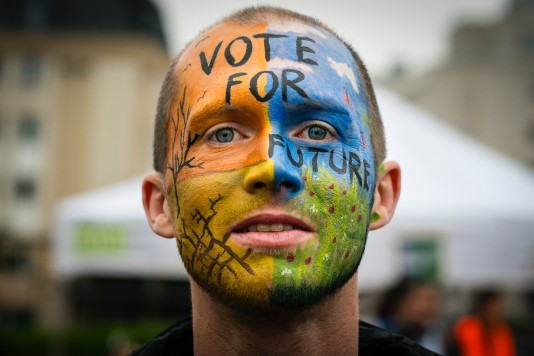
Now is the time to speak up: let’s demand that politicians fund our future!
Register your event and order material here!
Capacity-building workshop

Environmental NGOs and activists are increasingly becoming targets for online hate. Many of us encounter hateful comments on our social media channels daily.  Knowing how to deal with this can be a challenge. Should we just delete them, limit comments altogether, respond calmly, or even with humor? What's the right way to deal with online hate?

To answer these questions we're excited to announce our upcoming capacity-building workshop, 'Identifying and Combating Hate Speech Online: Strategies and Tools'. Join us online on September 24th from 11:00 AM to 12:30 PM.

Register here!
 
 (Un)learn & Share
The seeds that feed!

Seed diversity is essential for resilient agriculture and a just and sustainable transition of our food systems. In 2023, the European Commission proposed a seed law threatening crop diversity and farmers' seed rights.

Over 40 organizations and 125,000 citizens pushed for seed diversity with the 'raise our forks for diversity' campaign, leading to an improved text on it by the EU Parliament in April 2024. Now however, during discussions of EU Agriculture ministers, seed diversity and farmers’ rights to seeds are threatened once again.

Sign the petition!
All about markets!

Did you know that market regulations have been one of the top demands of farmers to ensure social and environmentally just food systems? The ECVC report, 'Putting Market Regulation at the Heart of the Debate about the CAP' gives a quick overview of all things related to markets!

Regulating agricultural markets is crucial for achieving the Green Goals set out by the EU, to achieve food sovereignty and ensure that farmers get the compensation they deserve. If you prefer to listen to it, ECVC has also launched a podcast series explaining the report in simple terms for you!

Listen to podcast!
Let's relocalize!

As the latest report by IPES shows, localized territorial markets are essential to ensure just and sustainable food systems and healthy food for all.

To put focus on this, the movement "La Ruche qui die Oui!" has launched a petition 'let’s relocalize the food system!' They aim to raise awareness on the need for a transition towards localized food systems.

'La Ruche qui dit Oui!' is a European movement connecting consumers and producers to bring a just agricultural transition through local communities, or Hives.

Sign the petition!
 
Food for Thought: The EU post-elections...What now?

With the EU elections behind us and the new EU forming, Brussels has been buzzing. Hungary now holds the EU presidency, Ursula von der Leyen is set for another term as European Commission President, and the EU Strategic Dialogue on Agriculture just wrapped up last week.

What does all this mean for food in Europe? Quite a lot!

After seven months of intense talks with 29 diverse agricultural stakeholders, a groundbreaking consensus during the Strategic Dialogue on Agriculture has been reached. Key recommendations of the report include shifting from area-based to income-based CAP subsidies, increase support for sustainable transitions, as well as new consumption policies that aim to make healthy, sustainable choices easier for citizens. These recommendations are a step in the right direction.

Still, the outcomes of the dialogue do show some weaknesses: It does not sufficiently cover pesticide and trade regulations, which are both fundamental to handle social and environmental crises of our times.  It is furthermore important to remember that these recommendations are not binding. 

So what now? 

Ursula von der Leyen has promised a Vision for Agriculture and Food within her first 100 days, which will shape the direction of her food politics during the new mandate. In 2025, the long-term EU budget will be negotiated and a new Common Agricultural Policy will be proposed. These are critical moments to apply pressure on decision-makers to ensure they turn the dialogue’s outcome into concrete action. We must also vigilantly monitor all involved groups to prevent any backtracking on the agreement.

In the meantime, if you want to discuss the EU’s sustainability and food politics and make your voices heard by politicians at the same time, you can join 'My Real Deal', a platform where citizens can share their ideas and concerns about the Green Deal.

Join the 'Real Deal'
 
Lights on...
Germany

Media, industrial farming lobbies, and some politicians have framed the narrative following the farmers’ protest this spring as if environmental needs and farmers’ needs are incompatible. However, we know that this is not the case. We need stronger coalitions between farmers, environmental NGOs, and activists to build effective alliances for just and sustainable food systems.

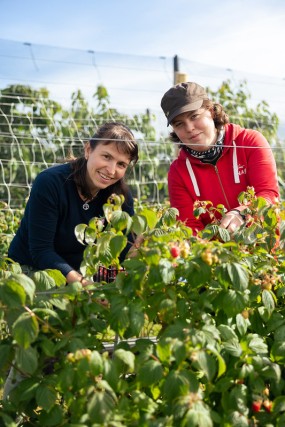
This June the German coalition 'We are fed up!' organized the project 'Farm with Future' for the fourth time, where activists and NGO workers were invited to spend a weekend on a diverse range of farms, to observe and learn as well as engage in constructive dialogues on how to shape the future of food and farming!

Check out impressions from participants!
 
Food for Laughs

With Hungary having taken over the presidency of the European Council in July this year, what better time to delve into the history of one of Europe’s most iconic dishes, Hungarian goulash!

Goulash was invented by humble cowherds, known locally as 'gulyás hús', who cooked broths on cauldrons over open fires using long-life and locally-sourced ingredients that suited their nomadic livelihoods. In the case of a death of one of the cattle, the meat would be added to the stew, which in turn came to give the iconic dish its name.

Following the arrival of chillies from the Americas, the Hungarian population had, by the end of the 19th century, bred new varieties, used new techniques for preparation, and developed their defining spice, paprika.

Colonialists imposed German as the official language at the time, restricting Hungarians' ability to express their cultural identity. So, they sought other ways - and food was the answer! One such way was the promotion of their popular new pantry-staple, paprika, and its key-role in goulash. This was so successful that the region soon had paprika shortages!

Pride in Hungarian heritage need not be based in ethno-nationalism, intolerance and isolationism as Mr Orban may wish for you to believe, a healthy dose of paprika does just the trick!

Recipe for a vegan goulash!
 

Address and Contacts

 Twitter  Web  Linkedin  Youtube